
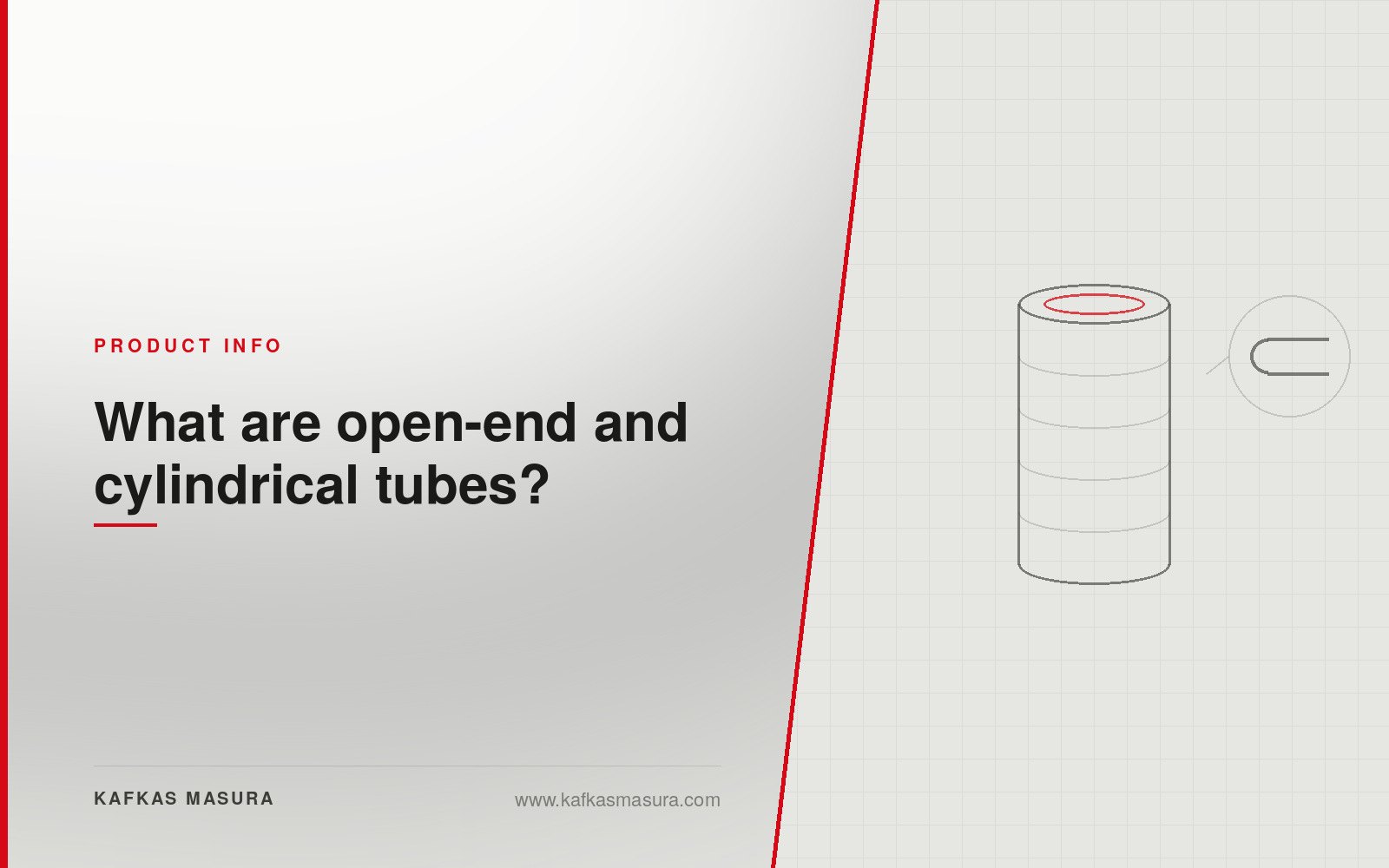
The open-end tube is one of the most discussed tube types in the textile industry. Its name comes from the production method and it is tied to a specific spinning technology.
What is open-end spinning?
In classic ring spinning, yarn is formed by twisting on a spindle. In open-end spinning, the fibre is fed into a rapidly rotating rotor, where it collects, is twisted, and is wound directly onto the package.
Because there is no intermediate stage, production is far faster. It is widely used for cotton and cotton-blend yarns, particularly for denim and home textiles.
What does cylindrical tube mean?
The tube used at this stage is a straight cylinder — not conical. Some tubes used in ring spinning may be conical; on the open-end side a standard cylindrical body is used.
In the industry, "cylindrical tube" and "open-end tube" usually describe the same product.
Common dimensions
Values frequently encountered in the industry for open-end tubes are:
- Inner diameter: around 42 mm
- Length: around 170 mm
- Weight: in the 55–60 gram range
These values vary with the machine and the plant's working arrangements; what is standard in one plant may differ in another. The exact size is determined by the spindle diameter and winding width of the spinning machine in use.
Curled and cut ends
Open-end tubes come with two end profiles, and this is not a preference but a requirement set by the machine.
Cut end: The tube is cut straight. Simpler to produce.
Curled end: One end of the tube is flared outwards. This curl prevents the yarn from slipping off the end during winding and, on some machines, makes it easier to grip the package.
Which one is needed depends on the machine's holding mechanism. If the wrong end profile is chosen, the tube will not seat on the spindle or the winding will be irregular.
Why is weight specified?
With open-end tubes, weight is discussed alongside dimensions. Two tubes of the same inner diameter and length will differ in weight if produced with different wall thicknesses.
Weight indirectly expresses wall strength: a heavier tube means a thicker wall. Higher weights are preferred on high-speed machines and with heavy packages.
Colour and printing
Open-end plants often run yarns of different counts at the same time. Tying tube colour to yarn count lets the operator tell packages apart without picking them up. Printing is used for batch tracking and brand visibility.
What to look at when selecting
- Machine spindle diameter — sets the inner diameter
- Winding width — sets the length
- End profile — curled or cut, according to the machine's holding mechanism
- Full package weight and speed — sets the weight
- Storage time and ambient humidity — sets the expectation for wall strength
At Kafkas Masura
Our paperboard tubes are produced in custom sizes, made to order. Share details of your spinning machine or the dimensions of your current tube and we can determine the right product together.
Printed and coloured tubes can also be supplied.